
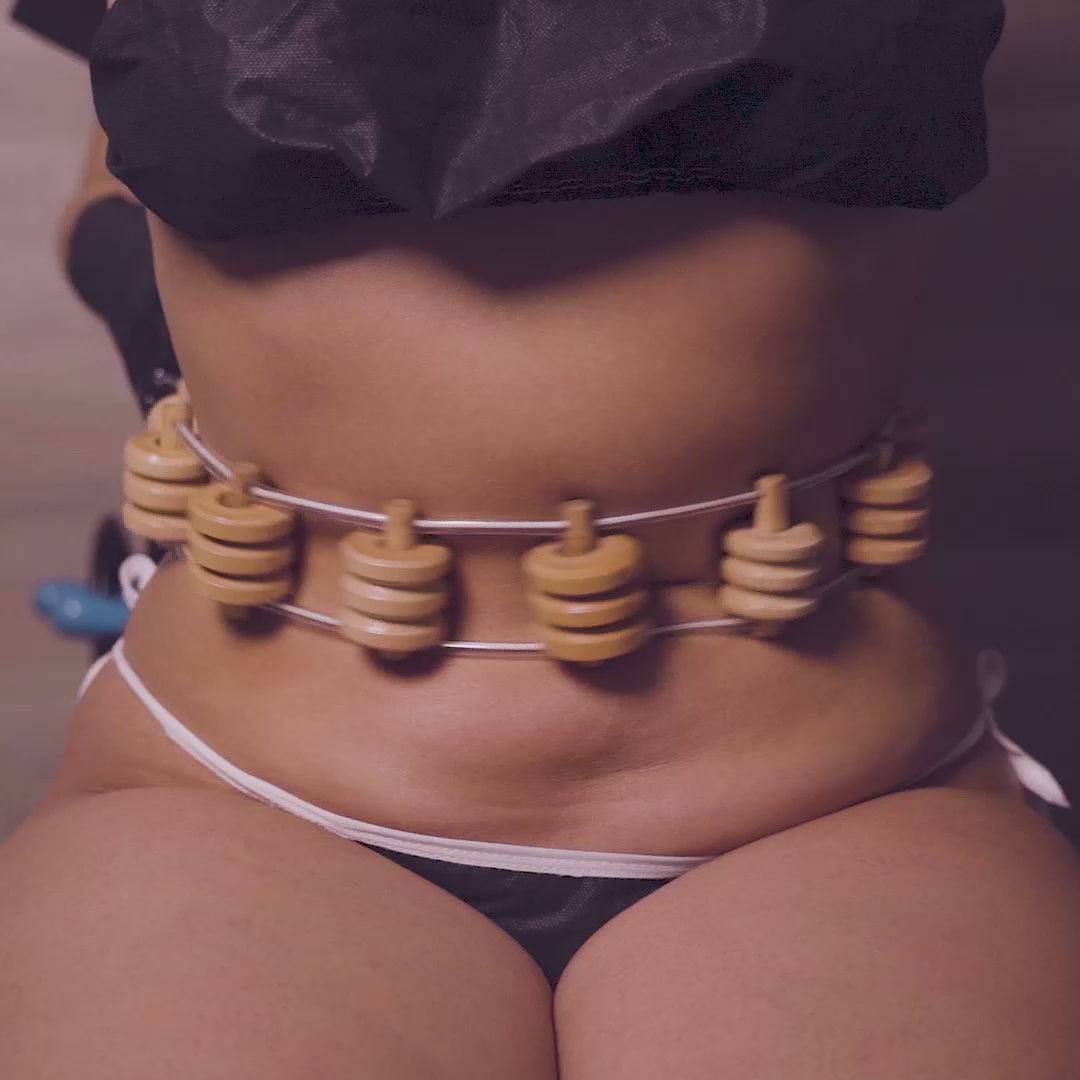
Body Ribbed Belt Pro
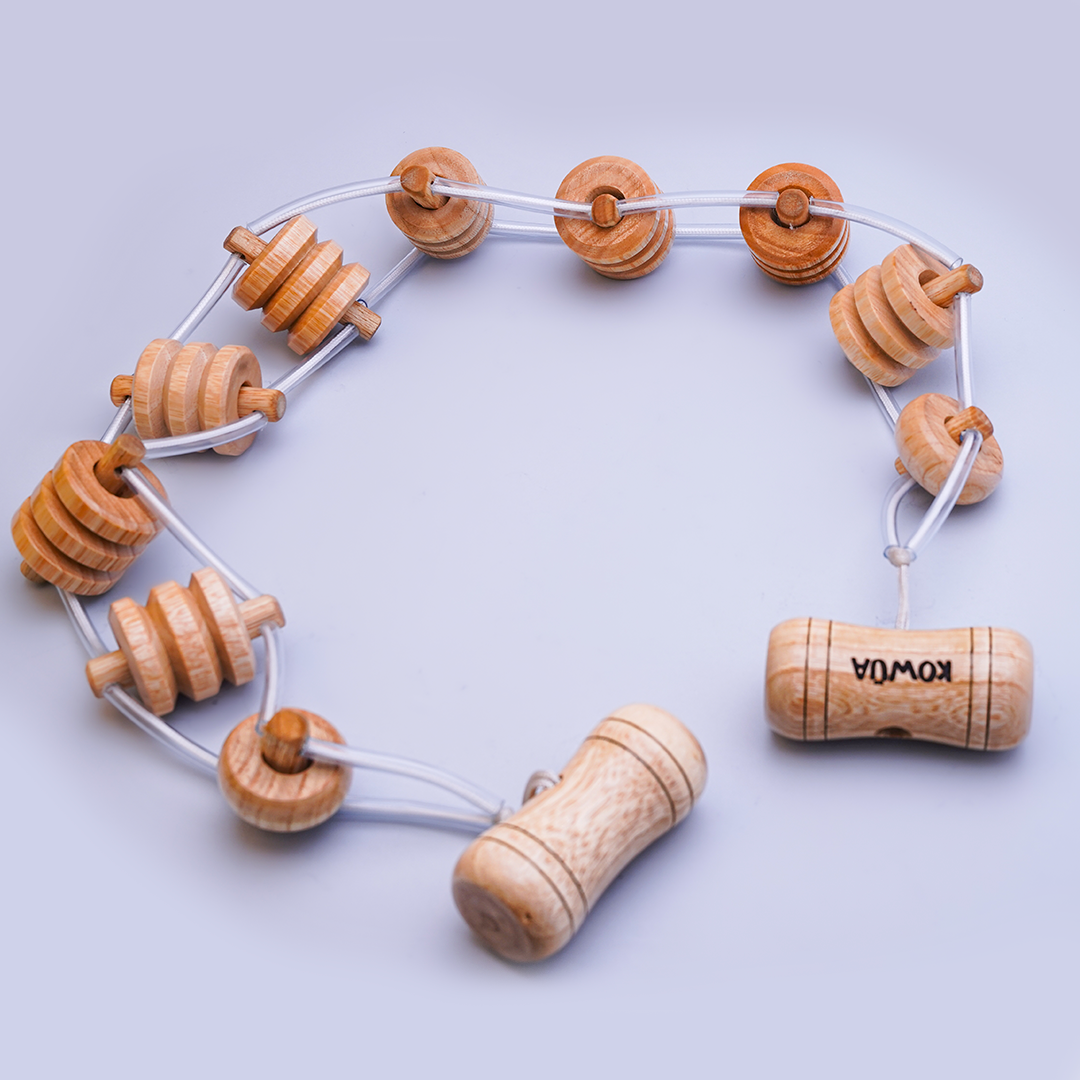
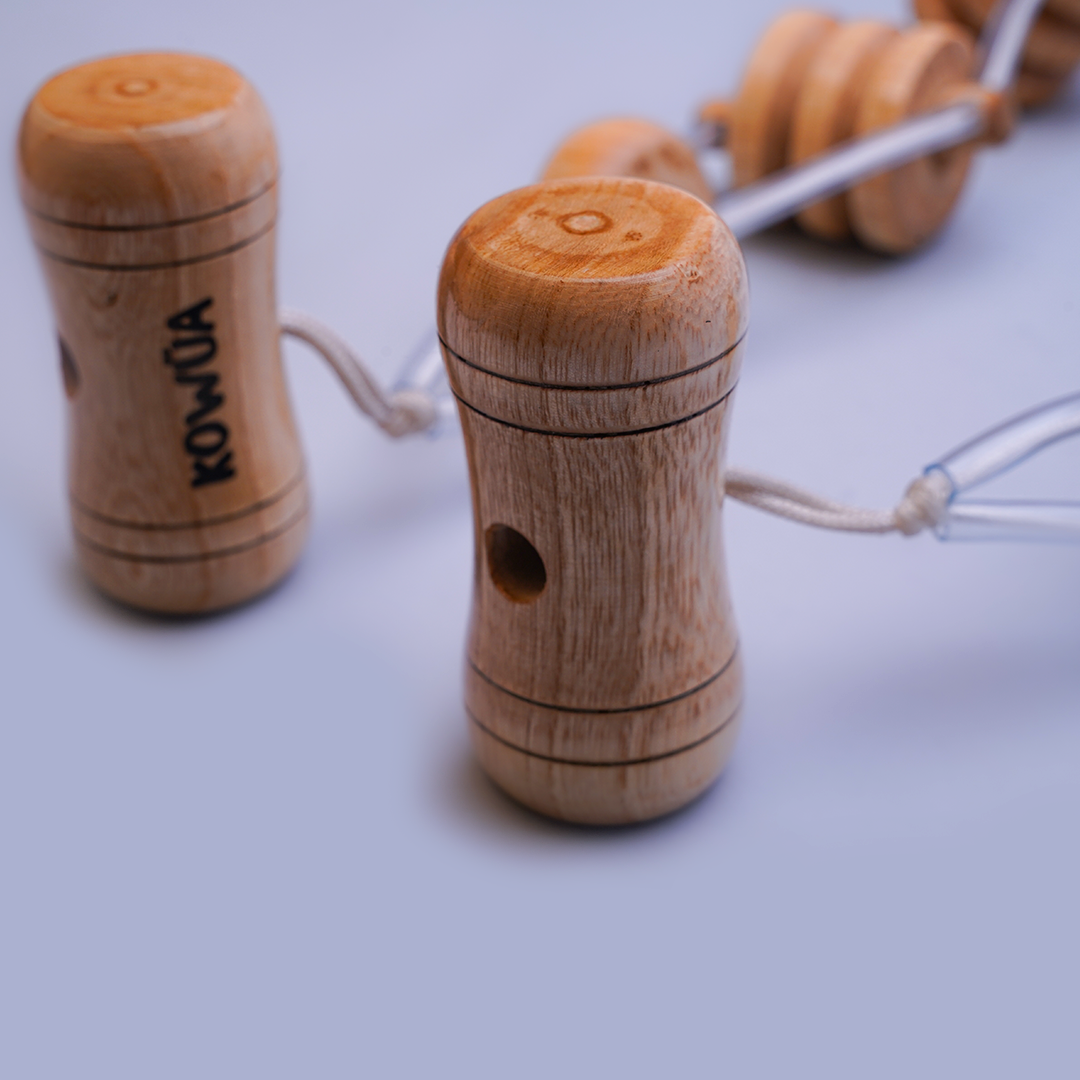
- 900 mm belt with a handle at each end
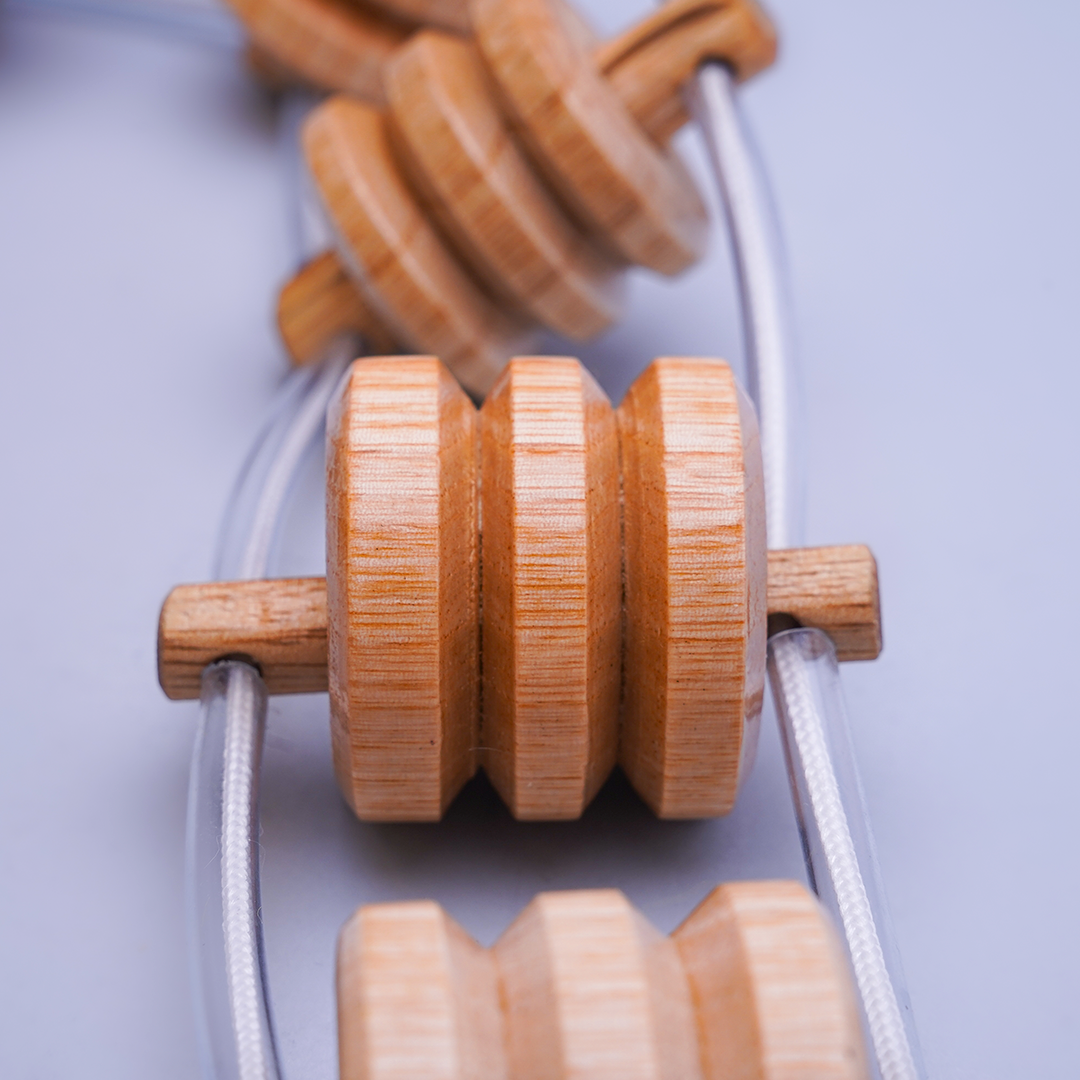
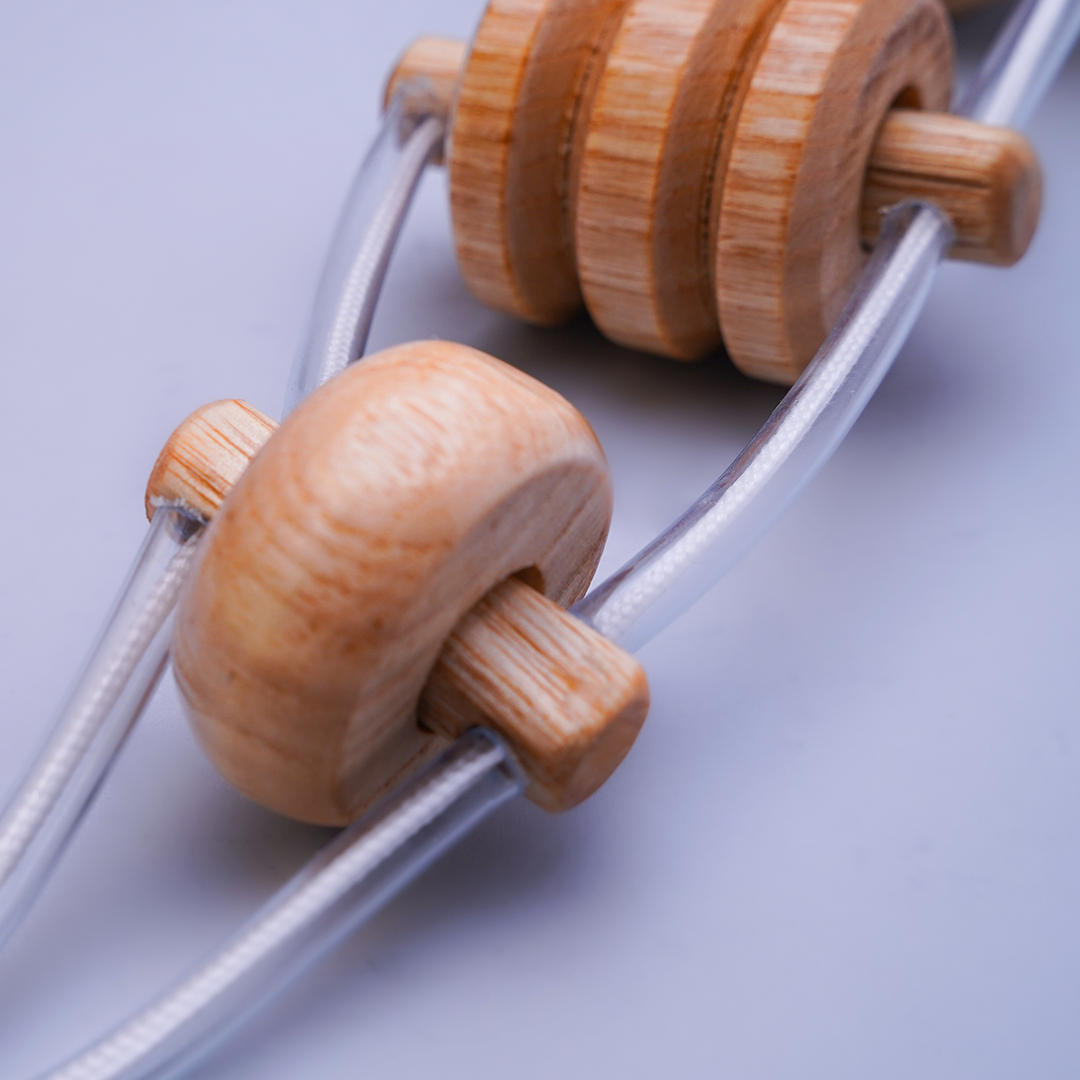
- Ribbed rollers that turn — they catch without the bite of cubes
- The belt to start with, before the Cube Belt
- Turned urapán rollers, not moulded
- The Body Ribbed Belt Pro is a versatile tool designed to contour and shape various areas of the body, including the waist, thighs, and arms. Its unique ribbed design enhances its effectiveness in marking and defining the waistline. Crafted with precision and functionality in mind, this tool is an excellent complement to body contouring and shaping protocols.
- Made by us Turned and finished in our own workshop in Colombia
- Solid urapán Turned rollers on a corded belt, not moulded
- Ships worldwide Tracked delivery to professionals in eight countries
- Trade pricing From 10 pieces, with your clinic's name engraved See wholesale tiers
Rollers that turn, not cubes that catch. The belt to start a client on.
Indicated for
Where this tool earns its place
Not the right tool for
Dense tissue that needs real bite — rolling discs glide where cube edges catch, and that is the design, not a shortcoming. Use the Cube Belt when you need more. Also not for thin skin, and not anywhere you cannot pass a band around the body.
- First sessionsThe gentler of the two 900 mm belts — build tolerance before the cubes.
- Waist and abdomenWraps the area and works both sides at the same time.
- Rollers that turn40 mm ribbed discs: they catch, then release, instead of dragging.
- Arms and thighsShort 35 mm rollers follow a limb rather than bridging across it.
- Self-appliedA client can use it on herself between appointments.
- Post-operative stagesOnly from the point the treating surgeon has cleared in writing.
How does it work?
Technical sheet
Specifications
These pieces are handmade by our artisans, so measurements may vary by a few millimetres.
| Overall length | 900 mm 35.4 in |
|---|---|
| Roller diameter | 40 mm 1.6 in |
| Roller length | 35 mm 1.4 in each |
| Handles | 40 mm 1.6 in, one at each end |
| Construction | Corded belt ribbed rollers, free-turning |
| Working face | Ribbed discs they turn as they catch |
| Wood | Urapán (Fraxinus uhdei) solid turned rollers |
| Finish | Natural, unvarnished sanded to a closed grain |
| Technique | Two-handed friction waist, arms and thighs |
| Body areas | Waist, abdomen, thigh, arm |

Technique
How to work with it
- 01
Oil first, generously
A belt works by friction, not by rolling pressure. Dry skin under a belt marks faster than under any handheld roller.
- 02
Wrap it and take a handle in each hand
Around the waist, the thigh, or over the shoulder for the back. The opposing pull does the work — you are not pressing in.
- 03
Let the rollers turn
If they stop turning you are pulling too hard or the skin is dry. Turning rollers work; a stalled belt just scrapes.
- 04
Short runs, then move
Shift the band before the area reddens. Warmth is expected; redness that does not fade means stop.
Made by hand
We are the workshop, not the middleman
Every KOWÜA tool is turned on our own lathes. We select the timber, cut it, turn it, sand it through progressive grits and finish it by hand. Nothing is bought in and rebranded.
We work with urapán (Fraxinus uhdei) because it is a dense hardwood with a fine closed grain — the surface stays smooth against skin instead of raising fibres after a few washes — and because it takes pressure without splitting.
Buying direct means the price of the factory, custom laser engraving with your clinic’s name, and someone who can actually change the tool if you need a different profile.
Care
Cleaning and sanitising
Never
Do not autoclave, do not soak, do not put it in a dishwasher and do not leave it submerged in disinfectant. Wood is porous — immersion swells the fibre, raises the grain and will crack the piece.
- After each clientWipe off oil residue with a dry or barely damp cloth, while the tool is still warm.
- Disinfect70% alcohol on the surface, then let it air-dry completely.
- StoreDry and flat, away from direct heat and sun.
If the surface ever feels rough, a light pass with fine sandpaper along the grain restores it. That is the advantage of an unvarnished finish: it can be renewed, and there is no coating to chip into a client’s skin.
Before you order
Questions we get
How do I know it is the right size?
It is 900 mm end to end. The working surface is 40 mm. Handle: 40 mm. The full specification table is above.
Can I use it on post-surgical clients?
Only with written clearance from the treating surgeon, who alone decides when a patient may progress from gentle manual lymphatic drainage to firmer tooled work. Clearance timelines vary widely between surgeons and between patients, and we publish none. Never on fresh incisions.
Does it need oil?
Yes. A dry tool on dry skin drags and bruises. Any professional massage oil works; ours are formulated to keep slip without soaking into the wood.
How long does the wood last?
With correct care — no immersion, no autoclave — solid urapán lasts years of daily clinic use. Urapán is a dense hardwood, which is why it holds a working edge instead of denting.
Will it mark the skin?
Redness and warmth during a session are expected. Bruising is not — it means too much pressure, or a tool too deep for that tissue. Treatment should never be painful.
Can I get my clinic’s name on it?
Yes. Personalize individual pieces or the tools you choose with your name or logo. The 10-piece minimum applies only to our distribution programme. Ask about personalization options and pricing.
Do you ship outside Colombia?
Yes, worldwide with tracking. For orders of 10 pieces or more we quote freight directly.
Which tool comes next?
Depends what you already have. Our wood therapy tool guide ranks every surface we make by depth and shows where each one belongs in a session.
Buying for a clinic or academy?
Wholesale starts at ten pieces
Mix and match any references. Discounts from 15%, custom laser engraving with your clinic’s name, and freight quoted directly so you are not paying retail rates.
See wholesale pricingChoose options