
Mushroom Shaper
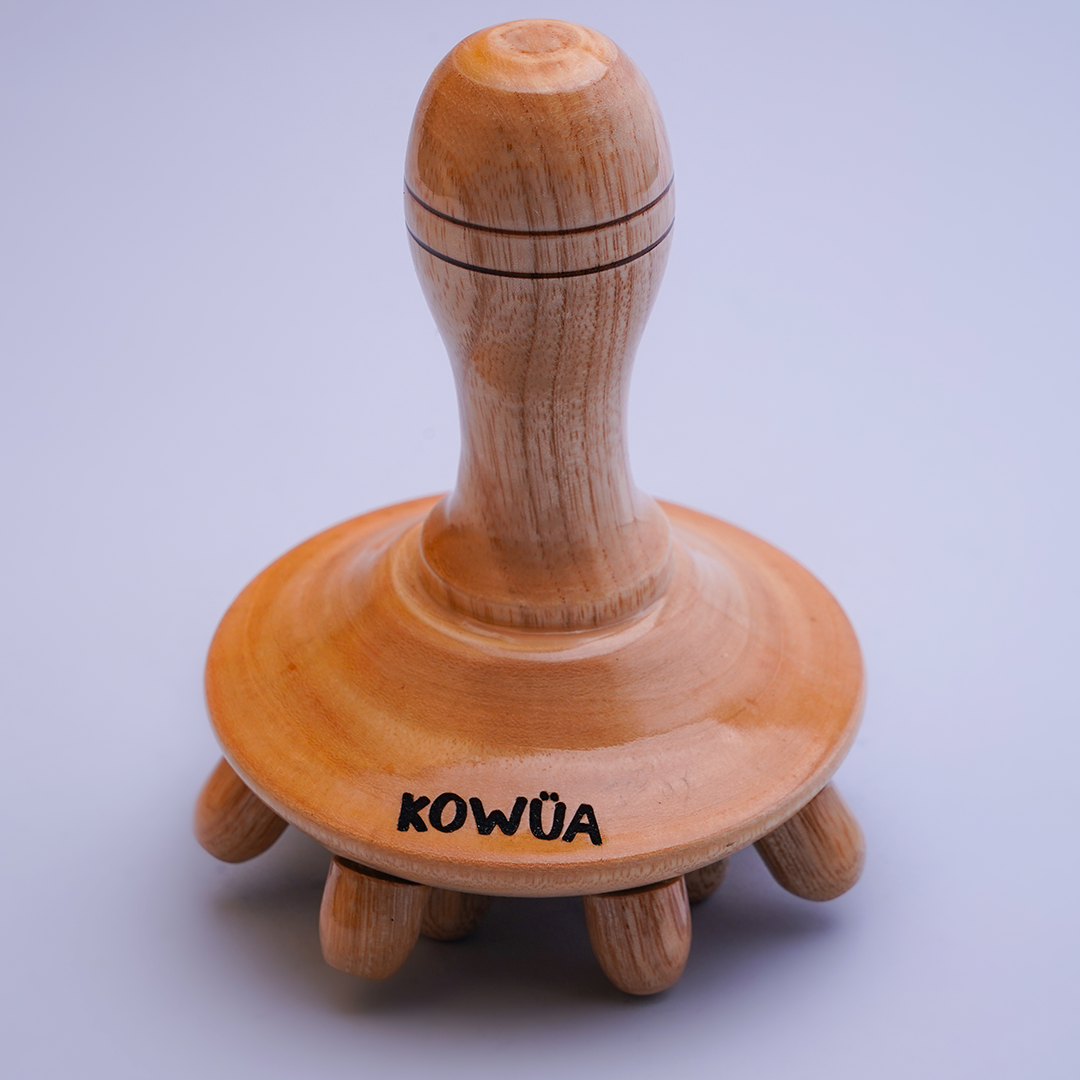
- 110 mm head, 135 mm tall — sits in one hand
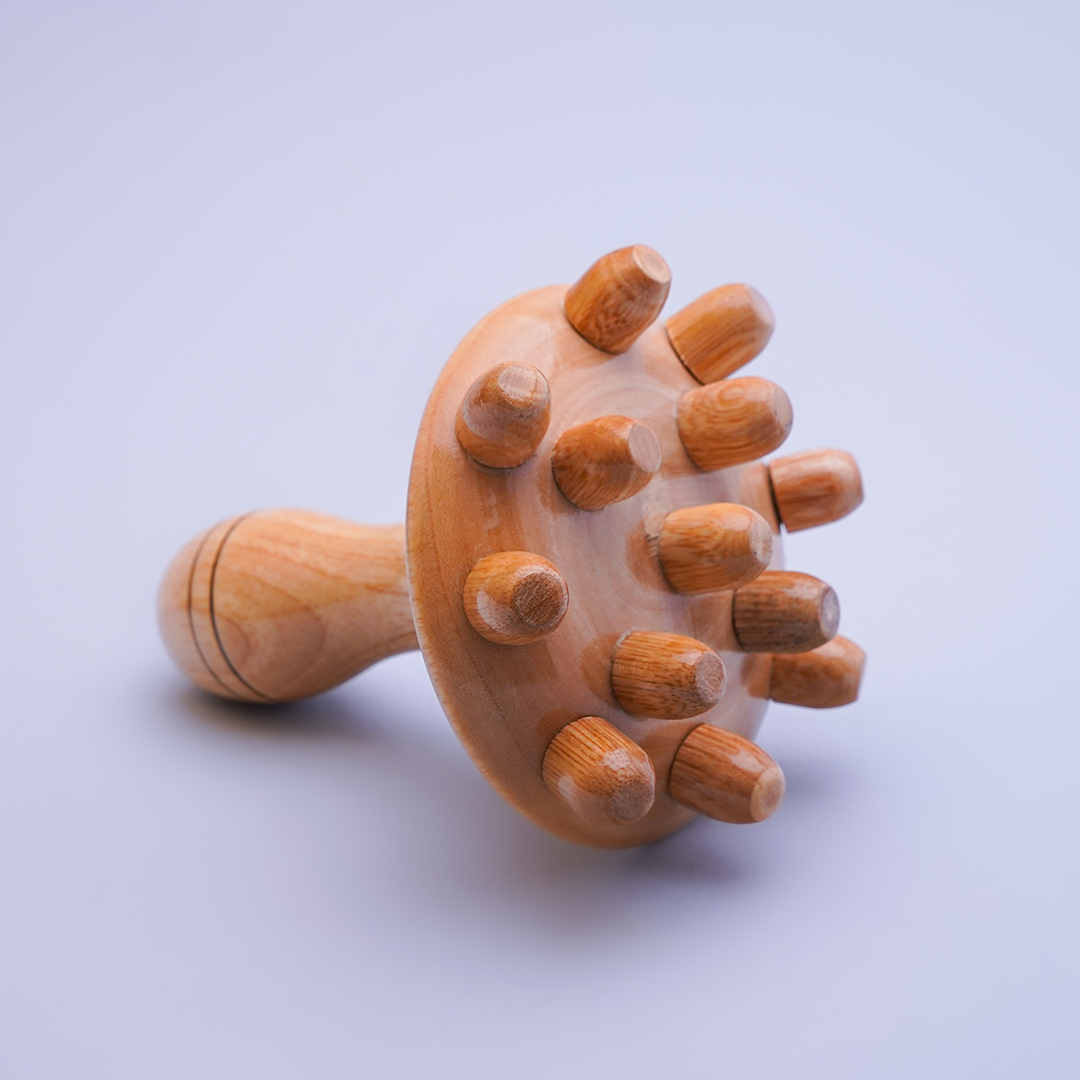
- 13 rounded pegs spread pressure, no edge to mark
- Dimpled skin, adhered tissue and microcirculation
- Solid urapán (Fraxinus uhdei) — a dense hardwood that holds an edge
Woodtherapy · Kneading
Thirteen rounded pegs on a 110 mm head — pressure that reaches deep without a single point that marks.
A roller passes over adhered tissue. A single-point tool digs into it and bruises. This sits between the two: multiple contact points spread the load across the area while each peg still works below the surface.
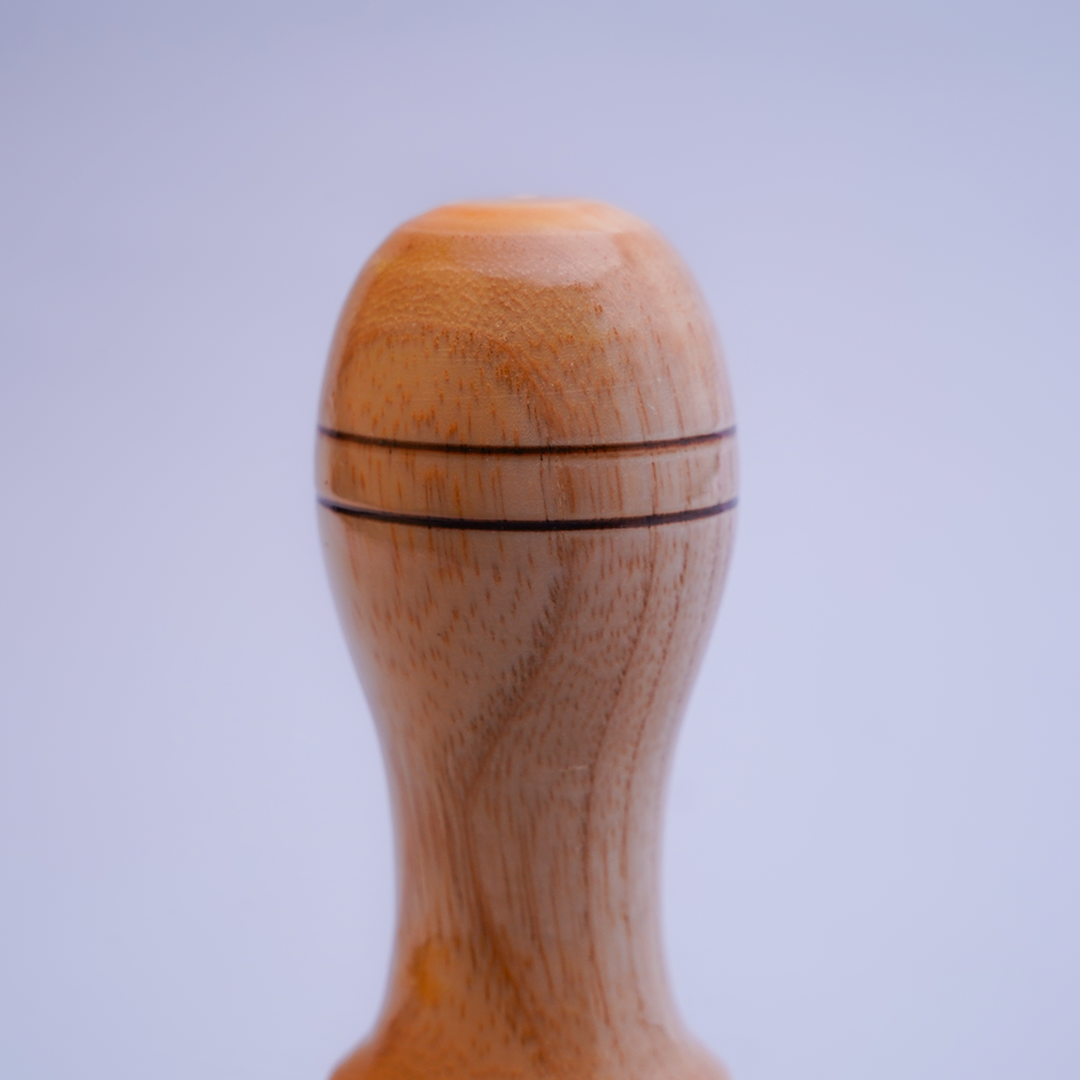
Turned by hand from a single piece of urapán.
- Made by us Turned and finished in our own workshop in Colombia
- Solid urapán Fraxinus uhdei — dense enough to hold an edge under pressure
- Ships worldwide Tracked delivery to professionals in eight countries
- Trade pricing From 10 pieces, with your clinic's name engraved See wholesale tiers
Thirteen contact points instead of one, so depth never becomes a bruise
Indicated for
Where this tool earns its place
Not the right tool for
Directly over bone, varicose veins, open wounds or fresh incisions. The pegs concentrate load — on a bony prominence that is pain, not therapy.
- Dimpled skinThe pegs work between the dimples, where a flat surface only presses the peaks.
- Adhered tissueRepeated point contact over areas a roller glides across.
- MicrocirculationMultiple contact points work a wider area than a single head.
- Curved surfacesButtock and outer thigh, where the domed head follows the shape.
- After the rollerThe detail pass, once the broad mobilisation is done.
- Shorter sessionsCovers ground faster than point work, deeper than a smooth tool.
How does it work?
Technical sheet
Specifications
These pieces are handmade by our artisans, so measurements may vary by a few millimetres.
| Overall height | 135 mm 5.3 in |
|---|---|
| Head diameter | 110 mm 4.3 in |
| Handle length | 90 mm 3.5 in |
| Contact face | 13 rounded pegs domed head |
| Wood | Urapán (Fraxinus uhdei) solid, dense hardwood |
| Finish | Natural, unvarnished sanded to a closed grain |
| Technique | Woodtherapy kneading and microcirculation |
| Body areas | Thigh, buttock, abdomen, arm |

Technique
How to work with it
- 01
Oil the area
Thirteen pegs mean thirteen points of friction. Without enough slip they drag and mark.
- 02
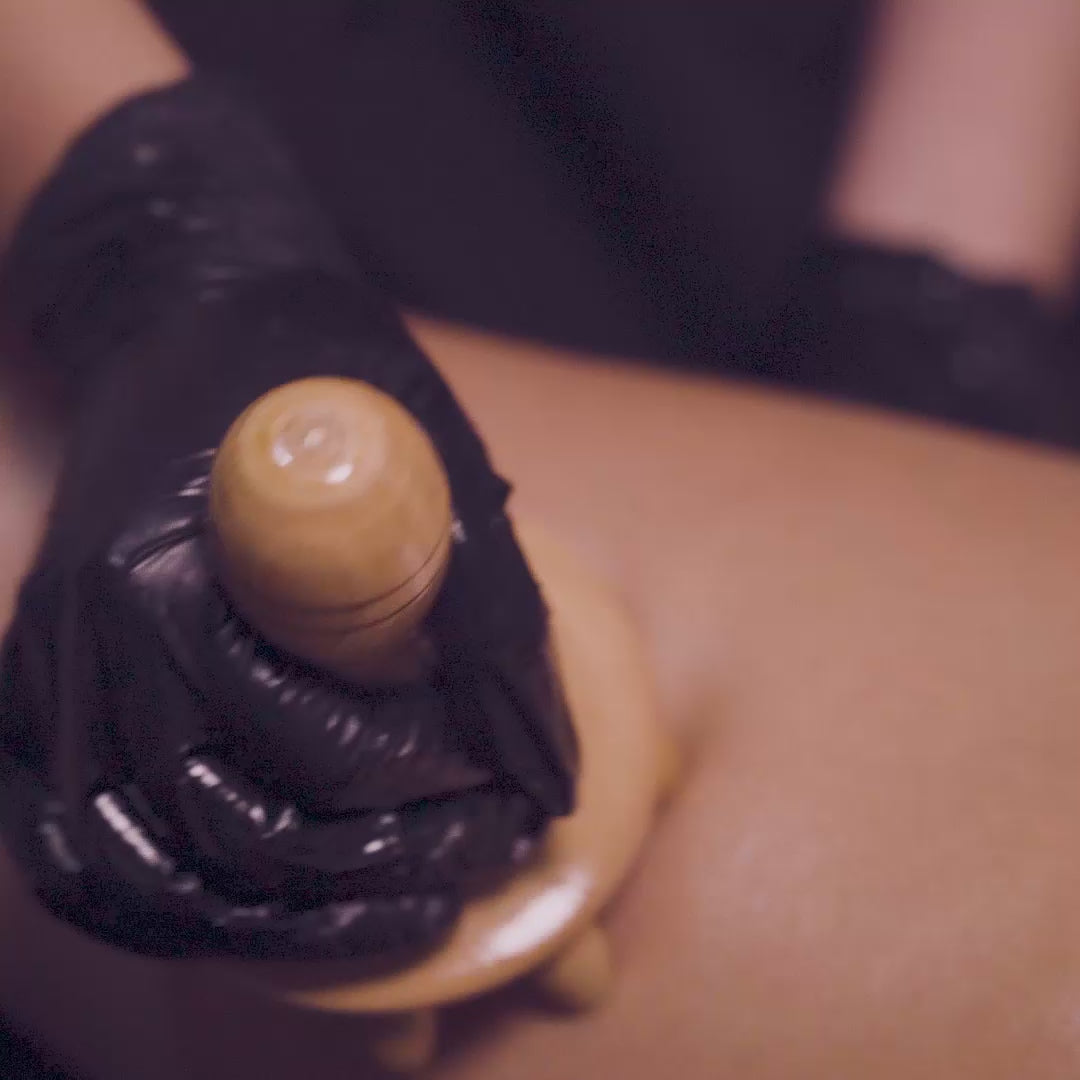
Lay the head flat
All the pegs should meet the skin at once. Tilting puts the whole load on two or three.
- 03
Knead, do not scrape
Small circles and short presses. The depth comes from leaning in, not from sliding.
- 04
Drain after
Follow with a smooth tool toward the nearest nodes. Point work releases fluid that has to go somewhere.
A full six-phase protocol for post-surgical fibrosis — with the tool sequence, timings and evidence level for each step — is available as a free download.
Made by hand
We are the workshop, not the middleman
Every KOWÜA tool is turned on our own lathes. We select the timber, cut it, turn it, sand it through progressive grits and finish it by hand. Nothing is bought in and rebranded.
The pegs are the slow part. Each one is turned and rounded separately, then set into the head. If one sits proud of the others it becomes the only point touching skin — so they are levelled by hand before the piece leaves.
Buying direct means you get the price of the factory, custom laser engraving with your clinic's name, and someone who can actually change the tool if you need a different profile.
Care
Cleaning and sanitising
Never
Do not autoclave, do not soak, do not put it in a dishwasher and do not leave it submerged in disinfectant. Wood is porous — immersion swells the fibre, raises the grain and will crack the piece.
- After each clientWipe between the pegs with a dry or barely damp cloth. Oil collects at the base.
- Disinfect70% alcohol on the surface, then let it air-dry completely.
- StoreHead up, dry, away from direct heat and sun.
If a peg ever feels rough, a light pass with fine sandpaper following the curve restores it. That is the advantage of an unvarnished finish: it can be renewed, and there is no coating to chip into a client's skin.
Before you order
Questions we get
How is this different from a roller?
A roller travels along a limb and mobilises broadly. This stays in one place and works it. Most protocols use both — the roller to move tissue, this to knead what the roller left behind.
Do the pegs hurt?
They should not. Thirteen rounded points share the load, which is the whole reason for the design — a single head at the same pressure would concentrate it in one spot. Discomfort usually means not enough oil or too much depth too early.
Can I use it on post-surgical clients?
Yes, once your protocol and the surgeon's clearance allow mechanical work on the area. Never on fresh incisions, and never as the first contact of the session.
Does it need oil?
Yes, and generously. Each peg is a separate friction point, so dry contact marks faster than with a smooth tool.
Can I get my clinic's name on it?
Yes. We laser-engrave logos and names from 10 pieces. See wholesale tiers and engraving.
Do you ship outside Colombia?
Yes, worldwide with tracking, and shipping is free on orders over $350 with duties included. For orders of 10 pieces or more we quote freight directly.
I am buying for a training academy. Is there a better route?
Yes — academies usually order the same reference in volume, which puts you in a wholesale tier straight away, with engraving included from 30 pieces. Request a quote.
Buying for a clinic or academy?
Wholesale starts at ten pieces
Mix and match any references. Discounts from 15%, custom laser engraving with your clinic’s name, and freight quoted directly so you are not paying retail rates.
See wholesale pricingChoose options