

Clay Sculpting
- Seven clays, one price — pick by protocol, not by cost
- Comes off before it cracks: a dried clay pulls at the skin
- The mask phase, after the tools have done the work
- Mixed fresh each time — never stored wet
The contouring clay. The one that follows body work on face or body.
- AppearanceSmooths the look of dimpled skin and leaves the complexion brighter-looking.
- After firm workHelps the treated area look calmer and less puffy at the end of a session.
Deep cleansing. The one that pairs with drainage protocols.
- CleanseWorks into the deeper layers of the skin — the most thorough cleanse of the seven.
- DrainageMay help support natural lymphatic flow when it follows manual drainage.
Activated charcoal. The exfoliating one.
- ExfoliationThe charcoal is what does it — a physical exfoliation, not an acid.
- Use sparinglyThe most intensive of the range. Not for thin or reactive skin.
Purifying and warming. For dull-looking skin and after deep tool work.
- CirculationSupports circulation and a renewed-looking complexion.
- ComfortThe clay to close a firm session with, when the area has been worked hard.
Exfoliates and brightens. The body clay.
- ElasticitySupports the look of supple, elastic skin over large areas.
- TextureExfoliates and leaves the skin looking brighter and more even.
The anti-ageing one. Fine lines and loss of firmness.
- Fine linesFor the appearance of lines and the visible signs of ageing.
- FirmnessSupports the look of firmness and bounce in the treated area.
Impurities, tone and hydration. The mildest of the seven.
- ClarityLifts impurities and evens out the look of the skin.
- ComfortTones and hydrates — the one for sensitive or reactive skin.
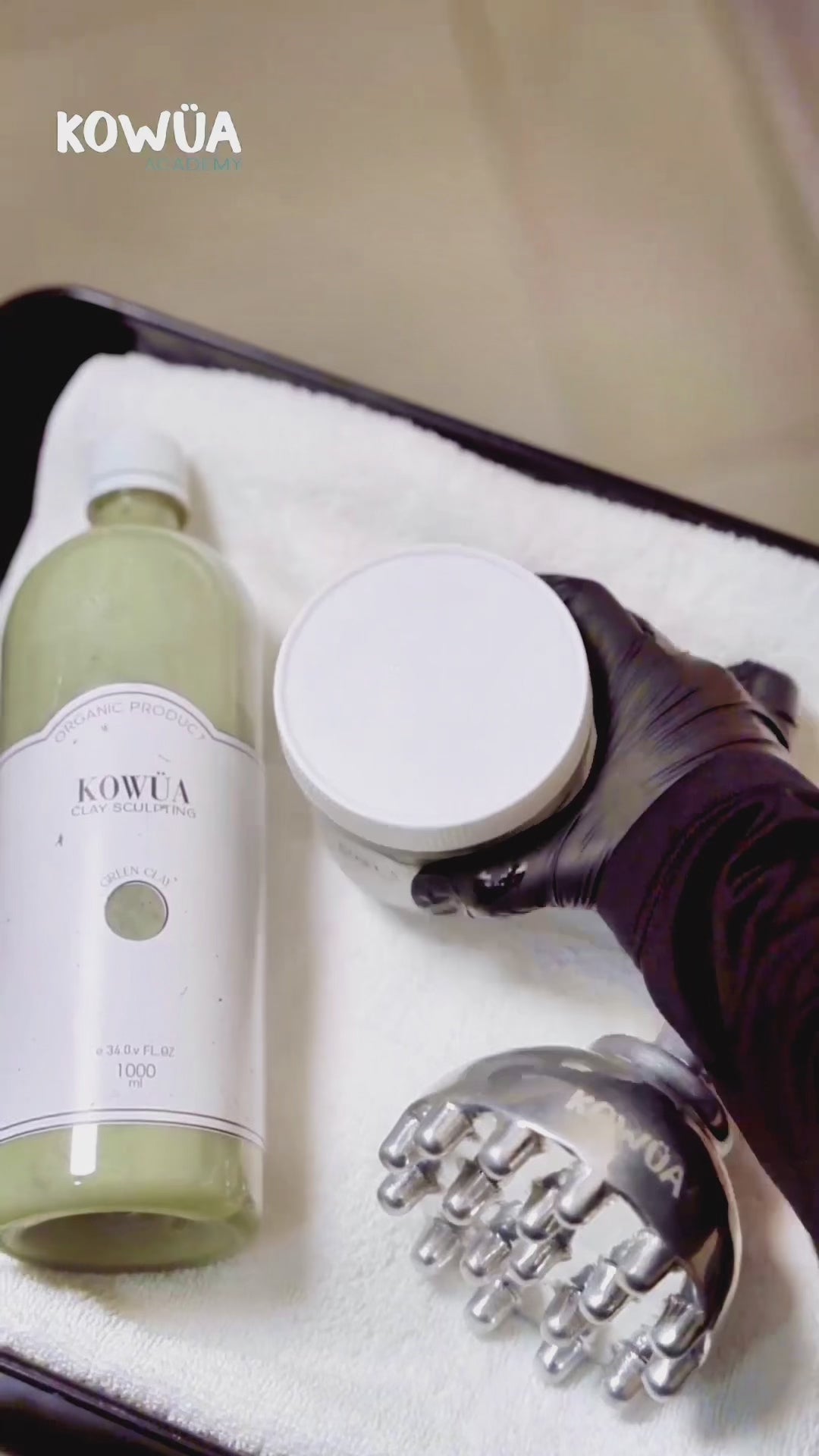
Seven clays mined and milled in the mountains of Boyacá, Colombia. Each colour is a different mineral composition, and each one suits a different phase or a different skin.
This is the mask phase of a protocol: it goes on after the wood or metal tools have done the work, and integrates into body contouring routines alongside metal therapy. Pick a colour below to see what it is for.
- Boyacá, Colombia Mined and milled in the mountains, not a repackaged import
- Seven compositions All at the same price, so the choice is clinical and not budgetary
- Ships worldwide Tracked delivery to professionals in eight countries
- Trade pricing From 10 units, mix and match across the catalogue See wholesale tiers
Seven clays from Boyacá. The mineral changes with the colour, and so does what it is for.
Indicated for
Where the clay phase earns its place
Not the right product for
Broken or irritated skin, active acne lesions, rosacea, or anywhere the barrier is compromised. Patch test with every new client. And it is not a treatment on its own — the tools do the work, the clay is the phase that follows.
- The mask phaseApplied over the area the tools have already opened and drained.
- Seven compositionsBlue, green, black, red, brown, yellow and white — different minerals, different uses.
- One priceSo you build the protocol around the client, not around the cost.
- Body and faceSame range, mixed thinner or thicker depending on the area.
- Wood, metal and geotherapyFits the protocols you already run rather than replacing them.
- Perceived valueThe visible, photographable part of a session — and what clients describe afterwards.
How does it work?
Technical sheet
Specifications
| Colours | 7 blue, green, black, red, brown, yellow, white |
|---|---|
| Origin | Boyacá, Colombia mined and milled in the mountains |
| Form | Powder mixed fresh with water or hydrosol |
| Phase | Mask after the tools, before the oil |
| Price | One price across all seven choose by protocol, not by cost |
| Removal | Warm damp cloth never scraped off dry |
| Shipping weight | 1.5 kg 3.3 lb per pouch, boxed |
| Technique | Geotherapy pairs with woodtherapy and metaltherapy |
| Body areas | Body and face mixed thinner or thicker by area |
In the session
How to work with it
- 01
Mix fresh, every time
Powder into water or hydrosol, never the other way round, until it is smooth and holds on a spatula without running. Clay mixed in advance and stored wet is a contamination risk, not a time saver.
- 02
Apply after the tools, not before
The clay closes a session. On skin that has already been warmed, worked and drained, it goes on evenly and comes off cleanly.
- 03
Thin, even, and off before it cracks
A thin layer over the whole area. The moment it starts to matt is the moment to remove it — a clay left until it cracks pulls at the skin and undoes the comfort you just built.
- 04
Warm damp cloth, then oil
Never scrape it off dry. Soften with a warm cloth, lift it away, and follow with massage oil to restore what the clay took.
Buying for a clinic or academy?
Options for your business
Explore professional ordering options for your clinic or academy.
See wholesale pricingChoose options